Reward systems for kids can be powerful.
They can also go wrong.
Used well, rewards help children see progress, build routines and feel proud of their effort. Used poorly, they can turn everyday family life into pressure, bargaining or comparison.
The difference is not only in the reward itself. It is in the tone of the system.
A positive reward system should say: “You are learning. Your effort matters. Progress is worth celebrating.”
It should not say: “You are bad if you do not earn enough. Your sibling is better than you. You only matter when you complete tasks.”
The goal is motivation, not shame.
Rewards are not bribes when used well
Many parents worry that rewards are just bribes.
That is understandable. No one wants every task to become a negotiation.
But there is a difference between a bribe and a positive reward system.
A bribe is usually offered in the middle of conflict: “If you stop screaming, I’ll give you candy.”
A reward system is different. It is planned in advance. It is connected to clear routines and expectations. The child knows what to do, what progress looks like and what they are working toward.
The reward is not a desperate tool to stop behavior. It is a structure that helps build habits.
Want calmer days like this? Start with OurFamilyHub — it’s free.
Download on the App StoreFocus on effort, routines and consistency
The best reward systems focus on repeatable actions.
For younger children, this might mean:
- Getting dressed
- Brushing teeth
- Packing their bag
- Putting toys away
- Feeding a pet
- Reading for 20 minutes
- Helping set the table
These are not dramatic achievements. They are everyday habits. That is exactly why they matter.
Children build confidence when they experience small wins repeatedly. A star for completing a morning routine is not only about the task. It is about the feeling: “I can do this.”
Over time, that feeling becomes independence.
Use non-material rewards
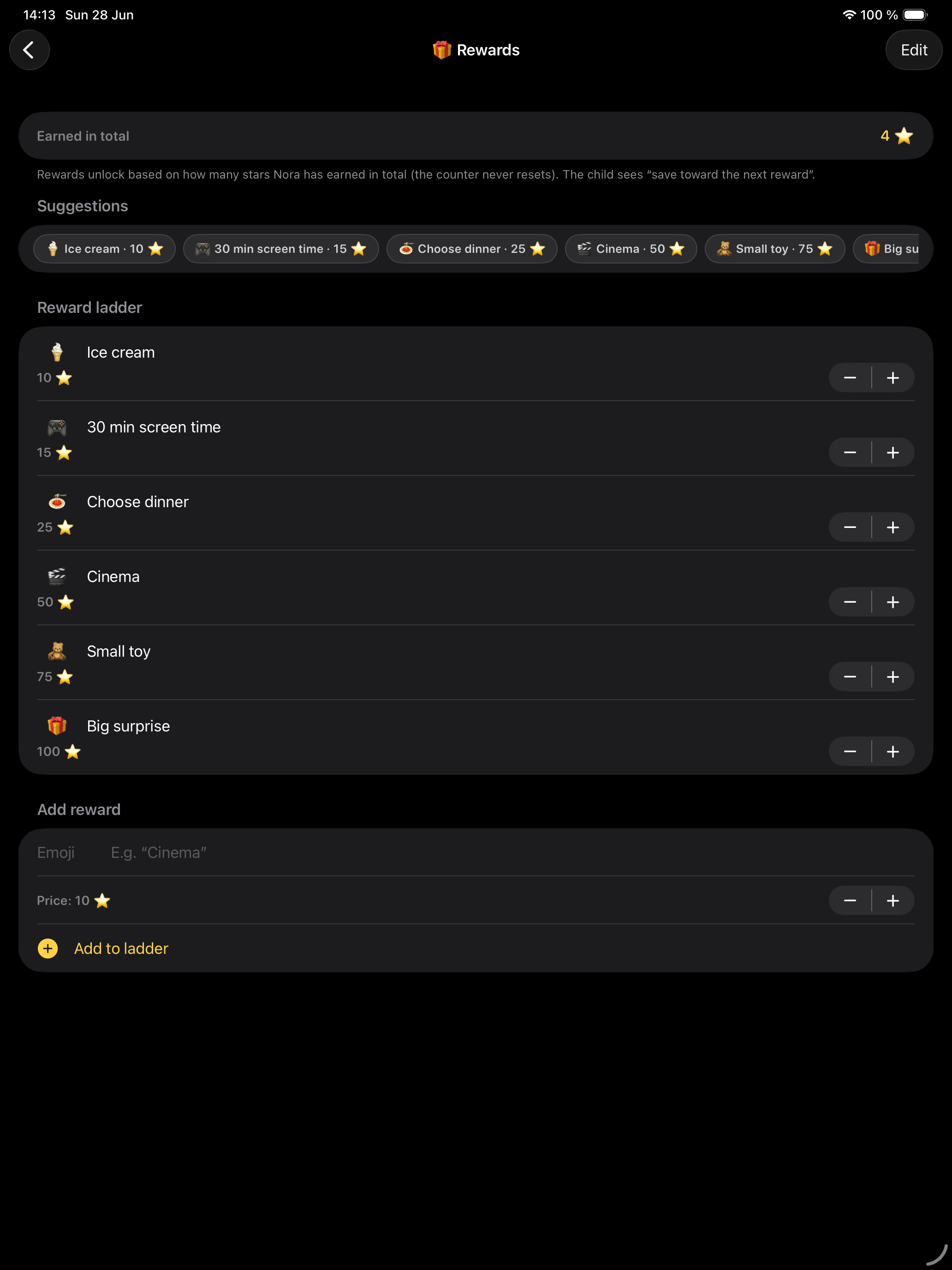
Rewards do not have to be toys or money.
In fact, some of the best rewards are simple, relational or experience-based.
- Choose the family movie
- Pick dinner
- Extra bedtime story
- One-on-one walk with a parent
- Choose the music in the car
- Sleepover in the living room
- Breakfast picnic
- Extra playground time
- Choose Friday activity
- Stay up 15 minutes later
- Pick a board game
- Special pancake morning
Non-material rewards keep the focus on connection and choice, not just consumption.
They also make the system easier to maintain. A reward ladder filled only with toys can quickly become expensive. A reward ladder with family experiences can feel more meaningful.
Avoid shame and punishment
A positive reward system should never become a scoreboard for shame.
Avoid phrases like: “Your sister has more stars than you. You never finish anything. You lost your stars because you were bad. Look how far behind you are.”
These messages can damage motivation. They make the system feel unsafe.
Instead, focus on each child’s own progress. Try: “You finished two steps by yourself today. You are getting closer to your reward. Let’s look at what comes next. Tomorrow is a new day. That was a good effort.”
The reward system should help children recover, not make them feel stuck.
Celebrate progress
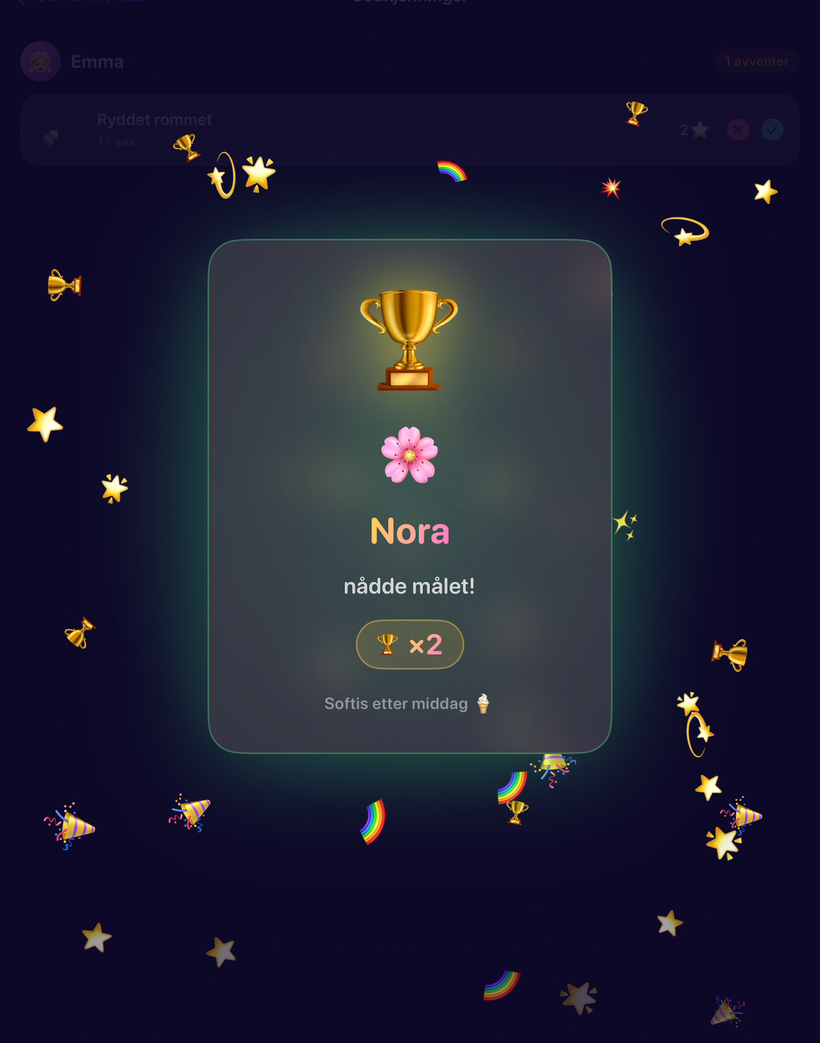
Celebration is not a small detail. It is part of why reward systems work.
Kids need feedback. They need to feel that someone noticed their effort. A star, animation, sound or small celebration can make a completed routine feel satisfying.
This is especially helpful for tasks that do not have an obvious reward by themselves. Brushing teeth, packing a bag or tidying toys may not feel exciting. But completing the step and seeing progress can feel good.
That positive feedback helps the habit become easier next time.
Keep parent control clear
Children should understand the system, but parents should manage it.
Parents decide which routines matter, which rewards are available and when tasks are approved. This keeps the reward system fair and prevents it from becoming a constant negotiation.
With OurFamilyHub, children can earn stars and see their progress, while parents stay in control from their own iPhone. Tasks can require approval, rewards can be chosen by the family, and each child can have their own path.
That balance helps the system stay positive: children participate, but adults guide.
OurFamilyHub turns these ideas into a simple board your kids can actually follow.
Download on the App StoreStart simple
The biggest mistake is making the reward system too complicated.
Start with one routine. Add a few steps. Choose one small reward. Let the child experience progress. For example, a morning routine of get dressed, eat breakfast, brush teeth, pack bag and shoes on — with a reward of earning stars toward choosing Friday’s movie.
That is enough. Once the system becomes familiar, you can add chores, evening routines, allowance or bigger reward goals.
A positive system feels like progress
The best reward systems do not make children feel controlled. They make children feel capable.
They show what to do next. They celebrate effort. They make progress visible. They help parents encourage instead of repeat, nag or negotiate.
A good reward system is not about perfection. It is about building small habits, one star at a time.