Teaching kids about money can feel surprisingly difficult.
You want them to understand saving, spending and making choices. But for younger children, money can be abstract. Numbers in a bank account do not always feel real. Even cash can feel disconnected from the everyday actions that earned it.
That is why stars can be a useful bridge.
Children often understand progress before they understand money. They can see stars adding up. They can understand that five stars is closer to a reward than one star. They can feel the difference between spending now and saving for something bigger later.
A star system can turn money lessons into something visible.
Kids understand progress before they understand money
For adults, money is a flexible tool. For children, money often starts as a simple idea: “Can I get the thing I want?”
That is why progress matters.
A child may not fully understand the value of 50 kroner, 5 dollars or 10 euros. But they can understand that they are halfway to a reward. They can understand that if they use their stars today, they will need more time to reach the bigger prize.
This is the foundation of financial learning:
- Effort creates value
- Value can be saved
- Saving creates choices
- Spending means choosing one thing over another
Stars make those lessons visible before money becomes fully intuitive.
Want calmer days like this? Start with OurFamilyHub — it’s free.
Download on the App StoreUse stars as a bridge
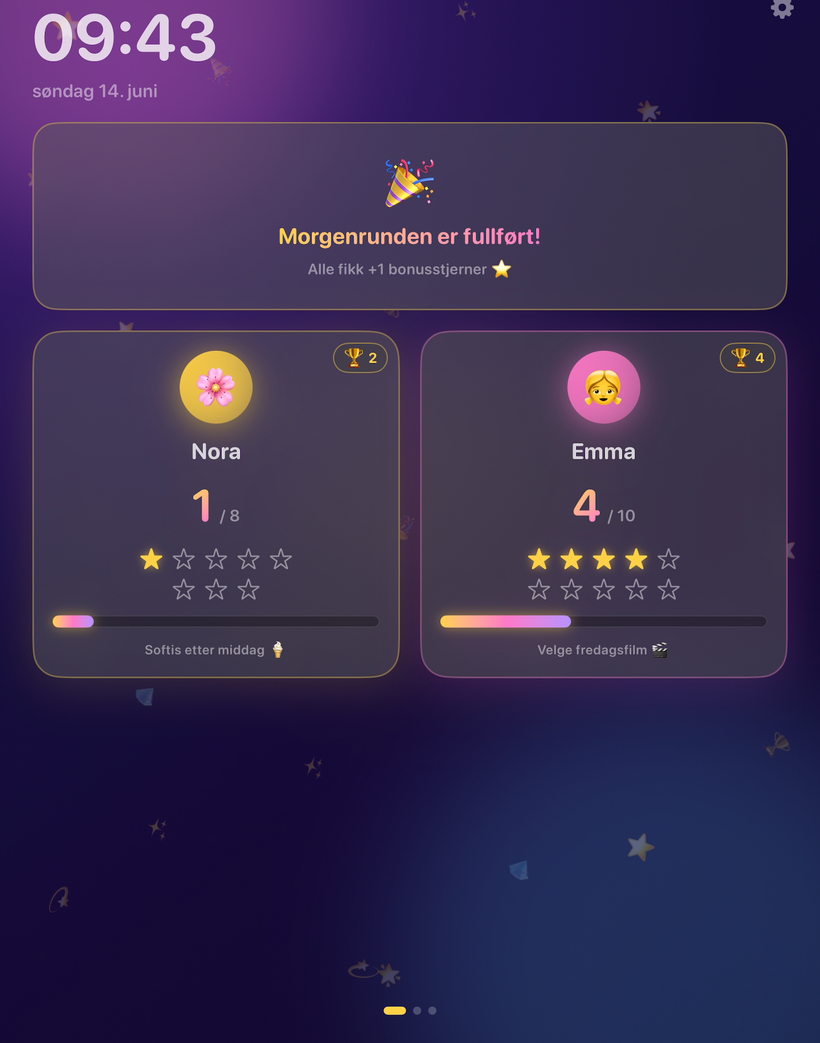
Stars work because they are simple.
A child completes a routine or task. They earn stars. Those stars collect over time. Eventually, they can be exchanged for a reward, privilege or allowance.
This gives children a safe way to practice financial thinking without needing direct access to real money.
They can ask questions like:
- “Do I want a small reward now?”
- “Do I want to save for something bigger?”
- “How many more stars do I need?”
- “What happens if I spend some today?”
These are the same questions adults ask about money — just in a child-friendly format.
Rewards vs pocket money
Not every family wants to connect chores and routines to money. That is okay.
There are two common ways to use stars.
Stars for rewards
Stars can unlock experiences or privileges, such as choosing a movie, staying up a little later, picking dinner, going to the playground or earning screen time.
This works well for younger children and for families who want motivation without making everything financial.
Stars for allowance
Stars can also connect to pocket money or allowance. This can help older children understand that effort, saving and spending are connected.
The important thing is that parents stay in control. Children should be able to see their progress, but adults should decide when and how money is paid out.
Why parents should approve every payout
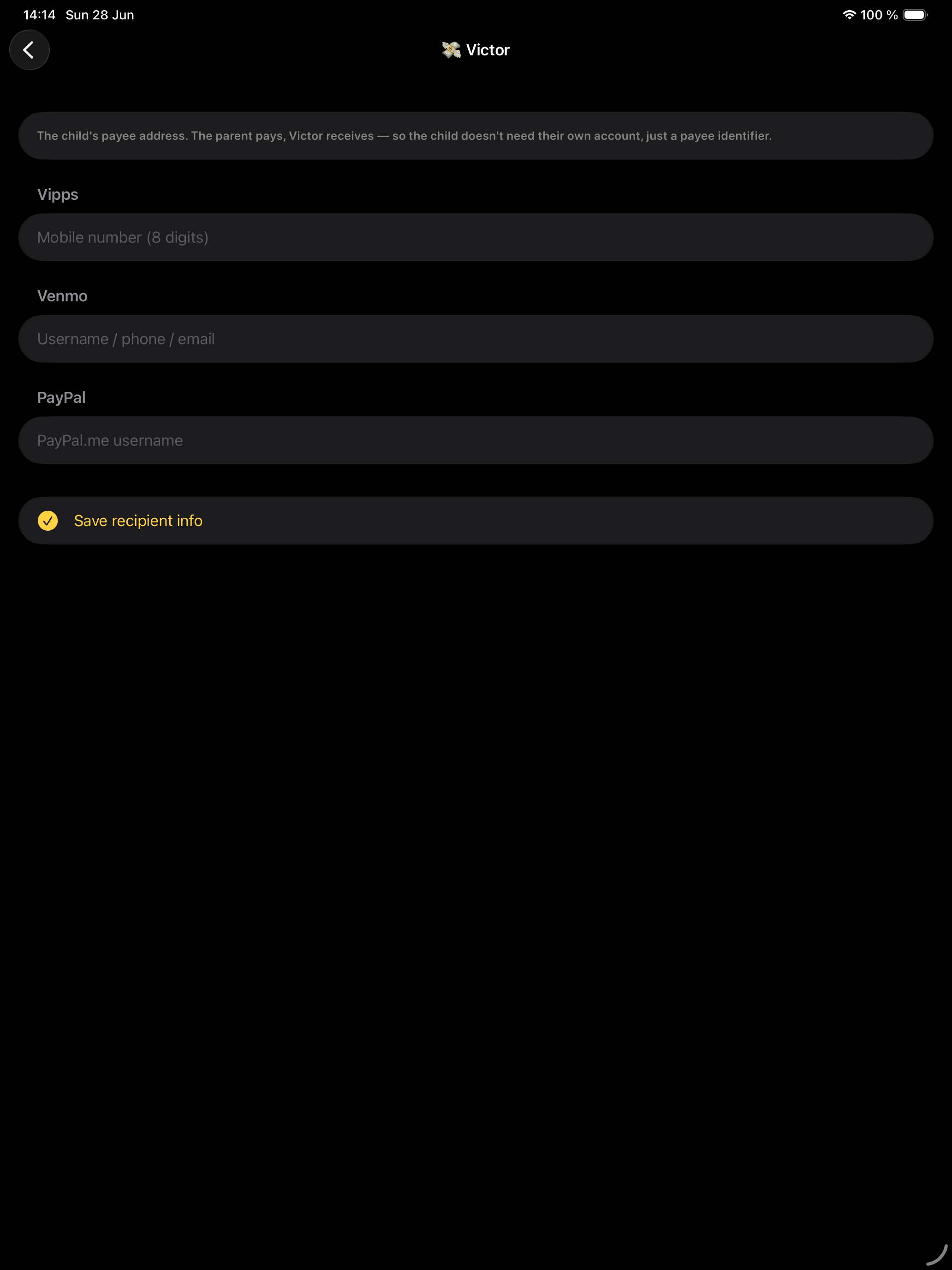
When real money is involved, parent approval matters.
OurFamilyHub is designed around this principle. Kids can earn stars and choose to cash out, but the app does not move money by itself. The parent confirms the payout manually in their own payment app.
That keeps the parent in control and makes the payout a teachable moment.
Instead of money silently disappearing from an account, the parent can say:
“You saved enough stars. Do you want to cash out now, or keep saving for the bigger reward?”
That conversation is where the learning happens.
OurFamilyHub turns these ideas into a simple board your kids can actually follow.
Download on the App StoreHow to teach saving and delayed gratification
Delayed gratification is one of the most important money lessons children can learn.
But it is hard to teach with lectures. It is easier to teach with visible choices.
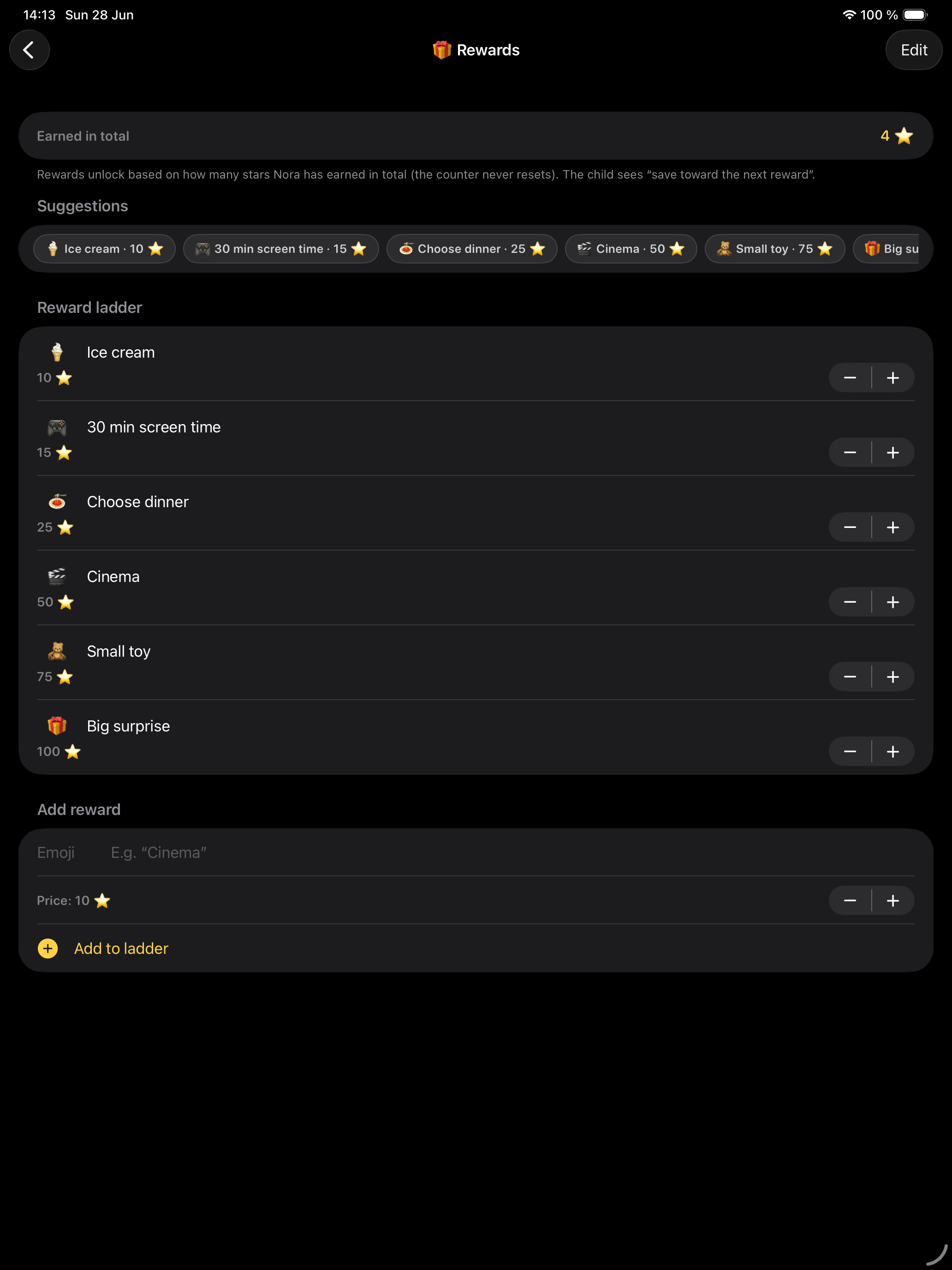
A reward ladder helps because it shows different options:
- Small reward: fewer stars
- Medium reward: more stars
- Big reward: save longer
The child can see the tradeoff. They may choose the smaller reward sometimes. That is fine. The goal is not to force saving every time. The goal is to help them understand the choice.
Over time, children begin to learn:
“If I wait, I can get something bigger. If I spend now, I start again. If I keep going, I can reach my goal.”
That is financial literacy in its simplest form.
Keep the system positive
Money learning should not become pressure.
Avoid using stars to shame children or compare siblings. A star system works best when it focuses on personal progress. Each child can have their own goals, their own reward ladder and their own pace.
The message should be: “You are learning. Your effort matters. You can make choices. You can save toward something you care about.”
That is a much healthier foundation than turning allowance into a daily argument.